Modeling Elections in Singapore,
A Closed Anocracy
Spring 2021
Abstract
This
paper explores and mathematically models a theory of Singaporean election
outcomes. Specifically, it asks how the Singaporean People’s Action Party (PAP)
has managed to receive a majority of votes in general elections for the past 62
years. While there is reportedly no foul play in the counting of ballots
themselves, the PAP has found other methods such as legal action, media
control, crisis rhetoric, and strict regulations on speech to marginalize its
political opposition — thereby forcing opposition parties to dilute their
campaign messages.
Included is a mathematical equation and
graph-algebra diagram which models this political theory. This model is not
tested against real data, but it is constructed in a way such that it can be visualized
and charted once data is collected and coefficients are calculated. This graph-algebra
feedback loop takes opposition campaign activity as an input, and hopes to
model the proportion of votes for the opposition party. The model does this by
taking into account the effect that international pressure may have on PAP opposition-party
crackdowns.
Introduction
On the tip of the Malay peninsula in Southeast
Asia lies a peculiar little island. A former British colony that, on the
surface, has become a western-style first world democracy. The city-state of
Singapore has seen tremendous economic growth since its independence in 1965
(CEIC 2019). It is seen as one of Asia’s main business and financial centers
and it is also a key western ally in the Southeast Asian region. By most
accounts, Singapore is a huge western success story, having embraced
capitalism, democracy, foreign investment, and even the English language.
Yet
somehow, even with all of these rapid advancements, something is missing in
Singapore. The government, supposedly democratic, is labeled by the Center
for Systemic Peace’s “Polity Project” as a “closed anocracy” (a government
which has some aspects of a democracy but remains “largely autocratic”)(Center
for Systemic Peace 2012; Rizio 2019). The country has been under single party
rule since the British left in the early ‘60s. Entitled the “People’s Action
Party,” or PAP, the party has repeatedly marginalized opposition politicians
(Gomez 2006), heavily restricted freedom of assembly and speech (Human Rights
Watch 2017), and centralized control of the press (George 2012).
My goal here is to better understand
how the PAP maintains its grip on elections. I’ll do this by conceptualizing a
theory regarding how opposition campaigns and public support of opposition
parties are affected by PAP crackdowns and meddling. I’ll then use graph
algebra to construct a non-linear model that reflects this theory.
People’s
Action Party
The
People’s Action Party, or PAP, was elected to power in 1959 after the city-state
was granted internal self-governing powers by the British colonial government
(Lepoer 1989). The PAP inherited many of the existing colonial institutions — including
the parliamentary system of government — and gradually started to consolidate
power.
By the time the British left
Singapore in 1963, the PAP had cast out its radical leftist faction and
in-so-doing eradicated its last serious electoral competition (Sim 2015). In
the time since, the PAP has tightened its grip on elections through use of
heavy-handed restrictions on opposition parties.
Some
Examples of Restrictions on Opposition Parties
Defamation
Suits
Often,
PAP ministers sue for defamation those opposition political leaders and
journalists who express criticism of PAP leadership. While Singapore is seen as
having a mostly fair and independent judiciary, it has often been criticized as
being compliant regarding defamation cases levied by the PAP (Mauzy and Milne
2002, 133). Opposition parties are often forced to dilute their message and
proceed with extreme caution in order to avoid costly defamation suits or, in
rarer cases, imprisonment (Gomez 2006).
Media Control
The
Singapore government has also established strong ties to all of the dominant
media structures in the country, including Singapore Press Holdings (which owns
the majority of Singapore’s newspapers) and MediaCorp (the only free
broadcaster in Singapore, a company which is evolved from the colonial state
broadcasting unit) (HistorySG 2014a;b). This contributes to Singapore’s abysmal
press freedom score in international rankings (Reporters Without Borders 2019).
Couple this with the fact that many news organizations have been hit with libel
lawsuits and publishing-license revocations in the past, and it’s clear why
opposition party sentiment does not get widely disseminated by traditional
Singaporean media (Gomez 2006). The PAP has also introduced heavy-handed
restrictions to online speech in the form of the recently passed POFMA law
(France-Presse 2019).
Rallies,
Public Events, Speeches
Regarding rallies, opposition parties need to
apply for a police-issued license every time they speak in public, and these
licenses are often arbitrarily denied. Interestingly, MPs from the ruling PAP
are exempt from this restriction (Gomez 2006).
Legitimacy
Because the PAP so tightly controls
Singaporean institutions, it’s easy to wonder why the party has so meticulously
maintained Singapore’s democratic façade. After all, holding regular flawed
elections seems to needlessly take up resources that autocratic regimes could
spend elsewhere.
According to scholars, the answer has to do
with Gerschewski's (2013) theory of autocratic
stability. In his work, Gerschewski identifies 3 pillars that explain autocratic
regime survival: co-optation, legitimation, and repression. Morgenbesser (2016)
focuses on Singaporean elections as a form of legitimation. In other words, he
explains Singaporean elections as an institution which contributes to the
government’s ability to maintain its popular mandate.
To
illustrate the point that the PAP uses elections as a mandate, Morgenbesser
points out the timing of general elections and stated reasoning behind this
timing. Most often, elections are called in response to a particular event,
policy, or as “reward collection” for when the government makes a major
achievement. The PAP knows that they are going to win these elections, but this
way, the PAP can insist that the policies they enact are regularly mandated by
the people through the electoral process.
For
example, in 1976, Singapore was contending with the oil crisis, a global
economic slowdown, conflict in the Middle East, and a turbulent political
situation in Japan. Prime Minister Lee Kuan Yew called an election because he
“always believed in clearing the decks before I run into rough weather”
(Morgenbesser 2016). In other words, the Prime Minister held an election to get
a mandate so his party could claim that their event response had the people’s
backing.
This
method of gaining legitimacy seems to have worked among Singapore’s populace,
as a recent survey shows that “76.7% of respondents believe voters are offered
a genuine choice in elections.” What’s more, “79.8% of respondents subsequently
expressed ‘a great deal’ or ‘quite a lot’ of confidence in the PAP government”
(Morgenbesser 2016; World Values Survey 2014).
Morgenbesser goes on to identify a
“critical function” of flawed elections: “translating support into obedience
amongst citizens. Absent this institution, the PAP would lack the moral
authority to govern. This interdependency explains why even flawed elections
are so important to it (and other authoritarian regimes).”
Theory
of Singaporean Election Outcomes
Effects
of Restrictions and Self-Censorship
Given the information discussed
above, a theory can be conceptualized regarding the predictable outcome of
Singaporean elections. Essentially, the PAP introduces opposition-party
restrictions such as the ones detailed above in order to force any opposition
to drastically dilute their message.
Crackdowns on opposition in Singapore are
designed to create a culture of self-censorship, in which Singaporeans will
refrain from expressing dissent for fear of PAP retribution. Because of this
forced self-censorship, contrarian viewpoints regarding Singaporean government
policy and leadership are not voiced in election campaigns. Therefore,
opposition parties struggle to differentiate themselves in way meaningful
enough to draw popular support.
Controlling
the Narrative: Crisis Motive
The PAP, on the other hand, is not
obliged toward self-censorship and is therefore free to sew distrust and fear
of opposition parties among its supporters. Singapore often bills itself as a
“small island with no natural resources,” a narrative which is pushed by the
government with the subtext that foreign investment and political stability
(read: PAP rule) are crucial for Singapore’s functioning economy. Ortmann
(2009) refers to this as the “crisis motive,” in which the PAP creates a “widespread
sense of psychosis” by playing up crises: the small size of the city-state, the
scarcity of natural resources, its location within “enemy territory,” etc. The
PAP positions itself as the only organization capable of successfully
navigating such issues. The goal of this crisis rhetoric is to “enhance”
Singaporean dependance on the government.
Maintaining
the Supermajority: A Two-Pronged Approach
The PAP’s approach, therefore, is
two-pronged. Firstly, opposition parties and journalists are heavily restricted
in their actions and incentivized to self-censor. This self-censorship makes it
difficult for opposition parties to ideologically differentiate themselves in a
meaningful way, leading to a lack of popular support.
Secondly, self-censorship ensures that PAP
leaders enjoy unhampered control over the nation’s political narrative. The PAP
takes advantage of this ideological vacuum by promoting crisis rhetoric that
makes the electorate feel dependent on PAP leadership. This two-pronged
approach has been successful in ensuring PAP victory in election after
election.
International
Pressure Theory
The
final part of the theory discussed in this report revolves around a factor with
the potential to break the ongoing cycle of PAP supermajority: international
pressure. Singapore’s economy relies heavily on foreign investment, and its
size means it is forced to rely on allies for much if its national defense. Therefore,
the Singaporean government has a strong incentive to keep global businesses and
international allies happy.
To do this, a staggering amount effort and
resources are spent on maintaining a positive international image. Tourists are
dazzled by extravagant architecture, entertainment, and world-class cuisine;
while corporations are drawn in using tax incentives and the promise of economic
stability. The government works hard to prevent Singapore’s squeaky-clean image
from being tainted. As a result of this, the Singaporean government has been
shown in the past to be susceptible to negative international press.
When the film Singapore Rebel, produced
by Martyn See, was investigated by Singapore police in 2005 for a possible
violation of the Films Act (a law banning political films), See
thoroughly reported every step of the investigation on his blog. In response, a
group of 11 Singaporean film producers openly petitioned the government to
“clarify how the Films Act would be applied .” This story was soon picked up by
international media, embarrassing the Singapore government and tarnishing its
reputation abroad. By 2009, the Films Act was relaxed (although it was not
repealed)(George 2012, 143).
Given the PAP’s response to negative coverage related
to the Films Act, it is possible that the Singaporean government might
respond in a similar manner given a similar situation. For example, it is
possible that the PAP would relax restrictions on opposition politicians given
enough negative international publicity on the issue. Therefore, this report
theorizes that international pressure is a factor that has the potential to
alter or even break the cycle of PAP supermajority.
Modeling
Singaporean Elections
Given
the theory of the PAP’s two-pronged approach to maintaining a supermajority, and
the cycle’s interaction with international pressure theory, a mathematical
model has been created using graph algebra. The output of this model is popular
support for opposition parties at the polls. This is the output that the PAP
hopes to minimize through their various methods. The input to the model is
opposition-party campaign activity. This is the input that opposition leaders
hope will increase their support output, but because of PAP intervention the
increase in support caused by these limited campaigns is usually negligible.
Inside the process is a feedback loop that
models the PAP’s response to changing support for opposition parties over time.
An international pressure indicator is also included that has the potential to
dampen the PAP response, thus potentially increasing the effect of opposition
campaigning on opposition support.
Output:
The
output of this model will be the proportion of total votes for opposition
parties. This is a good metric of popular support for opposition politicians
for a few reasons. Firstly, the votes on election day have tangible effects and
thus are seen as higher stakes than public opinion polls. Secondly, voting in
Singapore is compulsory under penalty of a SGD $50 fine, so a high proportion (~95%)
of the eligible population participates in elections (Mauzy and Milne 2002,
144).
Despite heavy restrictions on free speech and
opposition party campaigns, the US State Department regularly reports that “the
voting and vote-counting systems are fair, accurate, and free from tampering” (US
Department of State 2001; Mauzy and Milne 2002, 144). This means that the PAP
does not resort to ballot rigging or fraud, likely because such strategies could
work counter to the goal of elections, which is to maintain legitimacy among
Singaporeans (Tan 2013).
Input:
The input to this model will be a
measure of the election campaign activities of opposition parties. Although
campaigning is heavily regulated in Singapore, there are a few permitted
activities such as holding events with police approval, going door to door, and
mail advertisements that follow a certain format.
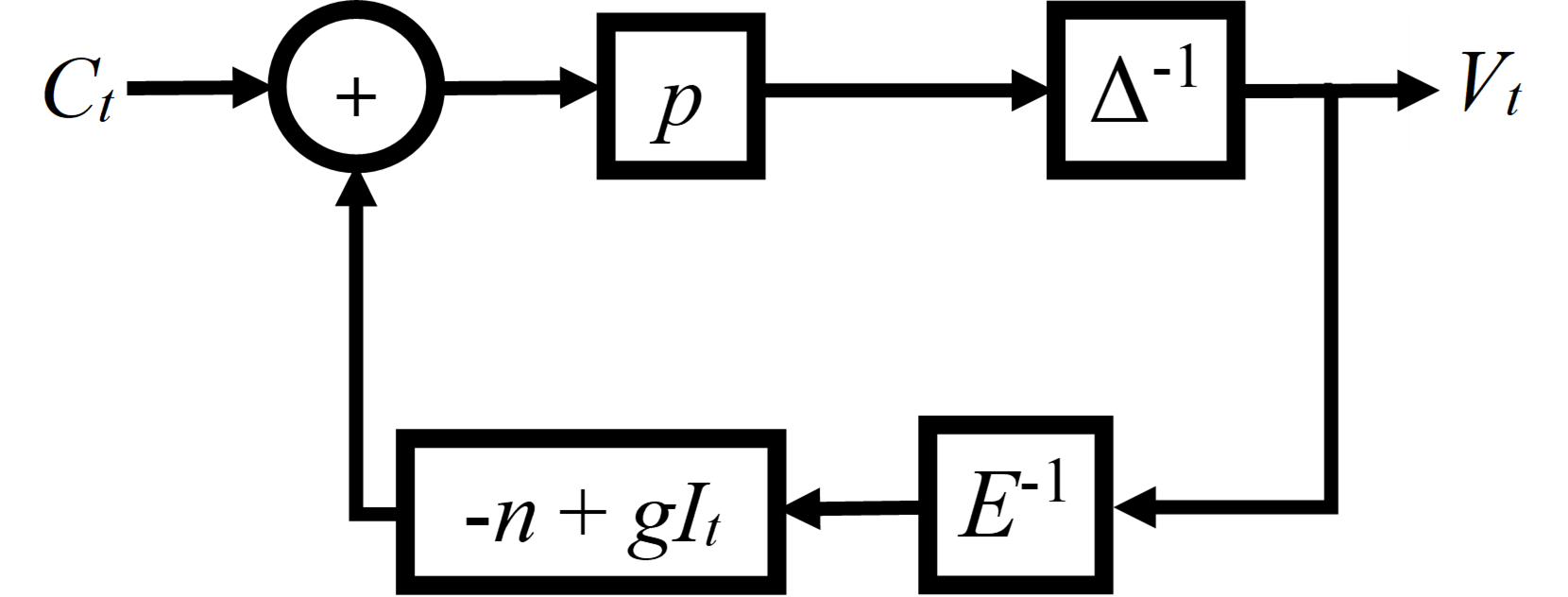
Figure 1: Support for Singaporean Opposition Parties
as Modeled by a Feedback Loop using Graph Algebra
ΔVt
= pCt – npVt-1 + gpIt-1Vt-1
Equation 1:
A Model of Support for Singaporean Opposition Parties, Derived from Figure 1
Step-by-Step
Explanation of Model:
1. A measure of opposition campaigning at time t,
Ct, enters the system shown in Figure 1
2. This campaigning causes a certain proportion
of Singaporeans to support an opposition party, this proportion is measured by
the parameter p
3. Because this proportion is summed up over
time, pCt is added up using a summation operator, Δ-1
4. After a certain delay, the PAP will use
methods to dampen or censor the message coming from opposition parties. Some
examples of dampening include suing the party or politician for defamation, social
media takedown notices (POFMA), criminal charges made on a technicality, etc.
Threats such as this force opposition parties to dilute or alter their message,
thus generating less enthusiasm and losing support.
5. E-1 is a delay factor and accounts
for the delay of the PAP response
6. The parameter -n is the diluting factor
that results from the PAP response
7. The term g*It is an
international pressure indicator. I measures the amount of pressure that
foreign entities such as media and NGOs put on the Singaporean government to
change their behavior. In practice, because this pressure is exerted in
response to the PAP response, I will likely have an additional delay to
the E-1 delay factor already mentioned above. For simplicity, this
additional delay is not modeled here.
8. g
is the proportion by which international pressure changes the PAP’s response,
or a measure of PAP susceptibility to outside pressure. The
Singaporean government has been shown in the past to be susceptible to bad
international press given that Singapore’s economy relies so heavily on foreign
investment. One example is its relaxing of the Films Act (a law banning
political films) in response to bad foreign press (George 2012, 143).
9. Given a positive g, more international
pressure I should offset the dilution factor -n such that the sum
of -n + gIt-1
approaches 0.
10. The negative feedback then filters back into
the system causing the sum of p to dwindle
11. Vt is the proportion of votes for third parties
on election day, and should correspond to the sum of pCt when
t = election day
Discussion,
Limitations, and Conclusion
One
limitation of this model is that it relies heavily on international-pressure theory.
While there is anecdotal evidence of the PAP easing restrictions after
receiving negative international coverage (George 2012, 143), there is also a
trend of PAP punishment of international news sources using defamation suits. For
example, Asia Week, Asian Wall Street Journal, Bloomberg, Far
Eastern Economic Review, Financial Times, International Herald
Tribune, The Economist and Time have all lost or settled PAP
defamation suits (George 2012, 42). Through this, we observe that the PAP
sometimes responds to negative coverage with media crackdowns instead of
pacification.
This being said, the model will still function
properly even if international pressure has no effect on PAP opposition-party
crackdowns. In this scenario, the value of the parameter g will be
entered as 0, and international pressure will not have any effect on the
model’s outcome.
In Version 2 of this model, I hope to add a
threat indicator in addition to the international pressure indicator. This
threat indicator would increase the severity of PAP crackdowns if opposition
party support starts to approach a certain threshold. This indicator would
likely involve adding a 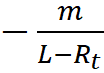 to the
feedback loop of the model. In this indicator, L represents the limit at
which the PAP expresses maximum crackdown severity. Rt represents
the proportion of support for the ruling party, the PAP. The theory of this indicator
is that as the proportion of vote share for the PAP approaches the limit L,
the severity of the PAP crackdown will increase exponentially.
to the
feedback loop of the model. In this indicator, L represents the limit at
which the PAP expresses maximum crackdown severity. Rt represents
the proportion of support for the ruling party, the PAP. The theory of this indicator
is that as the proportion of vote share for the PAP approaches the limit L,
the severity of the PAP crackdown will increase exponentially.
While data still needs to be
collected in order to measure the real-world accuracy of versions 1 and 2 of
this model, they already have utility in the sense that they provide a visual
and mathematical representation of political theory regarding Singaporean
elections. In doing this, these models describe a theory that has the potential
to explain how one of the most popular and successful authoritarian regimes in
history has maintained a 62-year electoral winning streak.
References
CEIC. 2019. View Singapore's Nominal GDP from
Mar 1975 to Jun 2019.
Center
for Systemic Peace. 2012. The Polity Project.
France-Presse, Agence. 2019. “'Chilling':
Singapore's 'fake news’ law comes into effect.” The Guardian.
George, Cherian. 2012. Freedom from the
Press: Journalism and State Power in Singapore. Singapore: NUS Press Pte
Ltd.
Johannes. 2013. “The three pillars of stability: legitimation,
repression, and co-optation in autocratic regimes,” Democratization
20(1): 13–38.
Gomez,
James. 2006. "Restricting Free Speech: The Impact on Opposition Parties in
Singapore." The Copenhagen Journal of Asian Studies 23 (1):105-131.
doi: https://doi.org/10.22439/cjas.v23i1.694.
HistorySG. 2014a. “Formation of Singapore
Press Holdings: Aug 4th, 1984.”
HistorySG.
2014b. “Temasek Holdings is Incorporated: Jun 25th, 1974.”
Human
Rights Watch. 2017. “Kill the Chicken to Scare the Monkeys, Suppression of Free
Expression and Assembly in Singapore.”
Lepoer,
Barbara Leitch, ed. 1989. “Singapore: A Country Study.” Washington: GPO for the
Library of Congress.
Mauzy,
Diane K., and R. S. Milne. 2002. Singapore Politics under the People's
Action Party. London: Taylor & Francis Group. ProQuest Ebook Central.
Lee. 2016. “The Autocratic Mandate: Elections, Legitimacy and Regime
Stability in Singapore.” The Pacific Review 30 (2): 205–231. doi:10.1080/09512748.2016.1201134.
Ortmann,
Stephan. 2009. "Singapore: The Politics of Inventing National
Identity." Journal of Current Southeast Asian Affairs 28 (4):23-46.
doi: 10.1177/186810340902800402.
Reporters Without Borders. 2019. 2019 World
Press Freedom Index.
Rizio, Stephanie M., and Ahmed Skali. 2019.
"How often do dictators have positive economic
effects?
Global evidence, 1858–2010." The Leadership Quarterly. doi: https://doi.org/10.1016/j.leaqua.2019.06.003.
Sim,
Cheryl. 2015. “People's Action Party: Pre-independence years.” Singapore
Infopedia.
Singapore National Library.
Tan, Netina. 2013. “Manipulating electoral
laws in Singapore.” Electoral Studies 32 (4): 632-643
https://doi.org/10.1016/j.electstud.2013.07.014.
US Department of State. 2001. “Singapore:
Country Reports on Human Rights Practices –
2000,” Washington, DC. https://2009-2017.state.gov/j/drl/rls/hrrpt/2000/eap/770.htm
World Values Survey. 2014. “World values survey wave 6: 2010-2014 [Online Analysis],”